 LOH OutfittersSouthern New Mexico
LOH OutfittersSouthern New Mexico
LOH OutfittersSouthern New Mexico
Most hunters shoot enough. They just shoot the wrong way.
A summer of tight groups off a bench produces a rifle that is properly sighted in and a shooter who has never rehearsed anything resembling a hunting shot. Then September arrives, the opportunity comes after a climb, from an awkward position, at an unhelpful angle, with an elevated heart rate and a time limit, and essentially none of that practice applies.
The frustrating part is that it is the same number of rounds. Fired differently, they would have prepared you completely. Here is how to spend them better.
The bench has exactly one job: confirming your zero and verifying your drops at distance. That is a session or two, not an entire summer.
The bench removes every variable that makes field shooting difficult. It gives you a solid rest, a comfortable position, unlimited time, a known distance, and no physical stress. Every one of those is absent when it matters.
Once your rifle is confirmed, the bench has nothing further to teach you. It will keep telling you your rifle is accurate, which you already know, while quietly building confidence that does not transfer.
On a New Mexico hunt you will most likely shoot off your pack, off shooting sticks or a tripod, sitting, or prone on ground that is not level. Occasionally kneeling, rarely offhand, and almost never off anything resembling a bench.
Practice each of them deliberately:
For each position, find your honest maximum range. Not the range at which you once made a good shot, but the range at which you can reliably put every round where it needs to go. That number is what you should hunt to, and it will be shorter than your bench number. That is the point.
In the field you get one shot from a cold barrel, with no warm-up, no sighters and no second attempt at the position. On the range most people fire twenty rounds and quietly judge themselves on their best group of the day.
Flip it entirely. Make the first shot of your range day count for something real. Walk up, build a position from scratch, range an unknown target, and take one shot. Then score yourself on that single round.
That one shot tells you more about your actual readiness than the rest of the box combined. It is also uncomfortable, because it removes the warm-up that flatters everyone, which is precisely why it is worth doing.
Real shots happen with an elevated heart rate, adrenaline, and the knowledge that this is the moment. You cannot fully replicate that on a range, but you can get considerably closer than a lawn chair and a cooler.
Do something physical first. A hard hike in with your pack, a set of burpees, a short sprint, anything that gets you genuinely breathing. Then build your position and shoot.
It will be humbling the first several times. Your natural point of aim wanders, the reticle moves with your pulse, and your hands are less precise than you expected. Learning to manage that, to settle your breathing and time the shot between heartbeats, is a trainable skill. It is much better learned in July than discovered on a live animal in September.
Want to know what kind of shot your hunt is most likely to present? Ask us. It differs a great deal between species and country, and it should genuinely shape how you spend your practice time.
Shooting well is only part of it. The other part is the sequence that happens before the trigger, and it is entirely rehearsable.
Range the animal. Check the wind. Decide whether the position you can build is good enough for that distance. Set your magnification. Confirm what is behind the target. Then shoot, or decide not to.
Run that whole sequence on the range every time rather than just settling in and firing. Under pressure people default to whatever they have rehearsed, and if all you have rehearsed is pulling a trigger, steps will get skipped.
The most valuable habit you can build is the decision to pass. A hunter who can look at a marginal opportunity, recognise it honestly, and choose not to take it will end more hunts well than one who takes everything offered.
The same principles apply with different specifics.
Archers should shoot broadheads, not just field points, at realistic hunting ranges, in the clothing and pack they will actually wear. Practice from a kneel and from awkward angles, because a broadside standing shot at twenty yards on flat ground is not what the mountain offers. And practice the cold first arrow, every session.
Muzzleloader hunters need to settle on a load and then shoot it enough to know their trajectory honestly. The drop curve is steeper than most people intuit, and knowing your real numbers at your real distances is the whole game. Practice your reload as well, because it is slow and you will want it to be automatic.
The most valuable outcome of good practice is not a longer effective range. It is a clear and honest one.
A hunter who knows they are genuinely reliable to four hundred yards from a pack, and who declines shots beyond that, will end more hunts successfully and more cleanly than one who believes they can do more and finds out otherwise with an animal in the scope.
We ask hunters to be sighted in from zero to three hundred yards with practice out to five hundred, and to hunt with the same weapon and ammunition they practiced with. The full details are on our hunt terms page.
It is confidence in yourself. Your rifle is almost certainly capable. The open question is whether you are, in the specific circumstances the field is going to hand you.
When the moment finally comes after four hard days, you want to build a position, settle, and break a clean shot without any doubt entering your head. That state only comes from having done it many times, badly and then well, in conditions that were not comfortable.
Ready to put a hunt on the calendar? Book with LOH Outfitters or call (575) 315-6107.
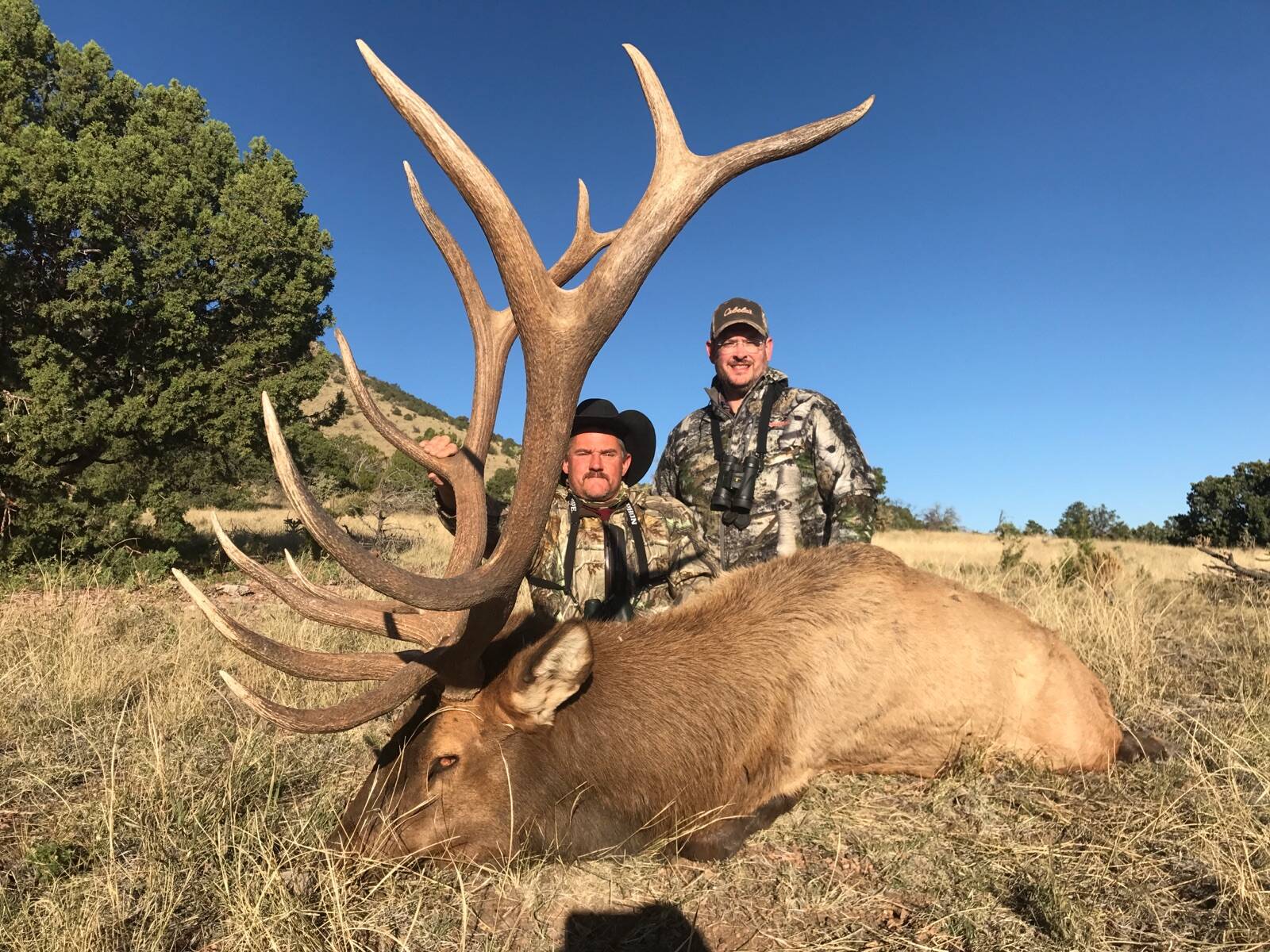
The shot is the part hunters rehearse for months. What happens in the two hours afterward is the part that determines whether you take home meat worth…
Read More →
Hunters preparing for a western hunt tend to pack for cold. It is what the photographs show: frost on the grass, breath in the air, heavy layers on a ridge…
Read More →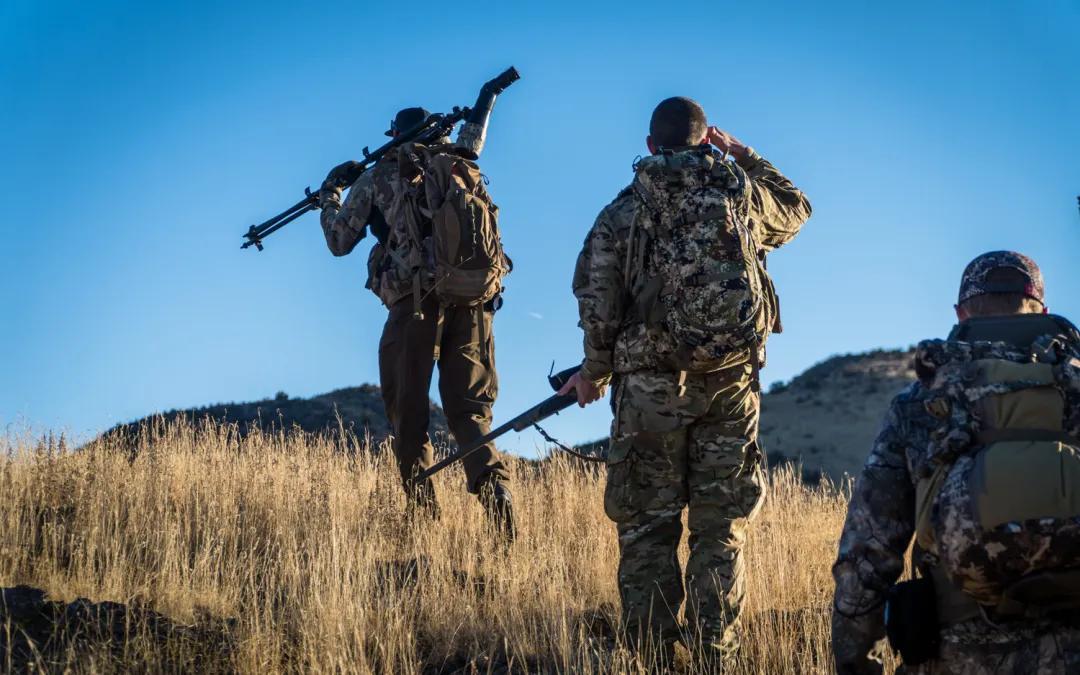
In open western country, the hunter who sees the most animals usually has the best week. Not the fastest hunter, not the fittest one, and certainly not the…
Read More →
Ready to Go?
Tags are limited and dates fill fast. Let's get your season on the calendar.
Book Your Hunt → or call (575) 315-6107