 LOH OutfittersSouthern New Mexico
LOH OutfittersSouthern New Mexico
LOH OutfittersSouthern New Mexico
The shot is the part hunters rehearse for months. What happens in the two hours afterward is the part that determines whether you take home meat worth eating, and almost nobody prepares for it at all.
In early-season New Mexico, with afternoon temperatures in the eighties and an animal that may weigh several hundred pounds, that window is short and completely unforgiving. Here is how it actually works and what your part in it looks like.
Before anything else: mark where the animal was standing when you shot, mark where you shot from, and take a moment to think.
Hunters who charge straight in push wounded animals further and turn what should be a short recovery into a long one, or into no recovery at all. Watch where the animal went. Listen. Note the last place you saw it and pick a landmark, because the country looks completely different once you are down in it.
Give it time unless there is a clear reason not to. Your guide will make that call based on the shot, the animal's reaction and the terrain, and it is worth trusting even when every instinct is telling you to go now.
Once the animal is down and confirmed, the clock starts and the priorities change entirely.
This is the part hunters most often misunderstand. Meat does not spoil primarily because of flies, or dirt, or hair. It spoils because of internal temperature.
A large animal holds an enormous amount of body heat, and a thick hide is extremely good insulation. Left whole, a bull elk will hold heat in its core for hours even in cool air, and bacteria multiply in exactly that warm, moist environment. Everything you do in the first hour is about getting heat out of the carcass as fast as possible.
A quarter left lying in a pile in the sun is a quarter you may genuinely lose. The same quarter hanging in shade with air moving around it will cool remarkably fast, even on a warm afternoon. The difference is entirely in the handling.
Game bags matter here. They keep insects off while still allowing air through, which is exactly what you want. Plastic does the opposite and should not be anywhere near warm meat.
Take your photos. They matter, you will want them for the rest of your life, and there is nothing wrong with wanting a good one.
But take them efficiently. Every season somebody spends half an hour arranging pictures on a hot afternoon while the animal lies in full sun. Clean the animal up, get the light roughly right, take a reasonable number of frames, and move on.
A good practical approach is to do the photos immediately, while your guide begins working, so the two happen in parallel rather than in sequence. Ten focused minutes gets you everything you need.
Cooling in the field is only the first stage. The meat has to stay cool from the mountain to wherever it is going, and warm weather makes that a genuine logistics problem rather than an afterthought.
Have coolers and ice arranged before your hunt, not after you have an animal down. Know roughly how much space several hundred pounds of boned-out meat actually requires, because it is more than most people estimate. Keep coolers out of the sun, drain melt water, and check them daily.
If you are driving home, plan the drive around keeping meat cold. If you are flying, understand the airline's requirements and packaging rules before you are standing at a counter with a problem.
Field preparation of game is included on our hunts. Our guides do this constantly, they are fast and careful, and they know how to get an animal cooled properly in this country and this climate.
Meat processing and shipping are not included, and this is the part hunters most often fail to plan for. Decide before your hunt how the meat is getting home: which processor you are using, whether you are shipping or driving, and what coolers or freezer space you need. Processors get very busy during the season, and calling ahead is the difference between a smooth handoff and a scramble.
The same applies to taxidermy. Have a plan for the cape and antlers before you need one rather than trying to arrange it from a truck. Full details are on our hunt terms page, and if anything is unclear, ask us before your hunt rather than on the mountain.
If you intend to mount the animal, the cape needs exactly the same urgency as the meat, and arguably more.
Heat and moisture cause hair slip quickly, and a slipped cape cannot be repaired. No taxidermist can fix it and no amount of money solves it afterward. In warm weather the window is genuinely short.
Tell your guide before the hunt that you plan to mount. It changes how the animal is handled from the very first cut, particularly around the brisket and the neck, and it is far easier to plan for than to correct. Once a cape has been cut short for a European mount, it cannot be made longer.
Get the cape off, get it cool, and get it to a taxidermist or into a freezer promptly.
Recovering an animal in warm country is genuinely hard work. It is frequently on a steep hillside, often in the dark, sometimes a long way from anything resembling a road, and it takes multiple trips.
It is also, for a lot of hunters, the part they remember most clearly years later. The shot takes a second. The work afterward takes hours, and it is where the hunt actually becomes real.
Doing it properly, quickly and respectfully is what separates a harvest from a waste. It is the last obligation you owe the animal, and it is the part of the hunt most worth getting right.
Planning a hunt this season? Book with LOH Outfitters or call (575) 315-6107.

Hunters preparing for a western hunt tend to pack for cold. It is what the photographs show: frost on the grass, breath in the air, heavy layers on a ridge…
Read More →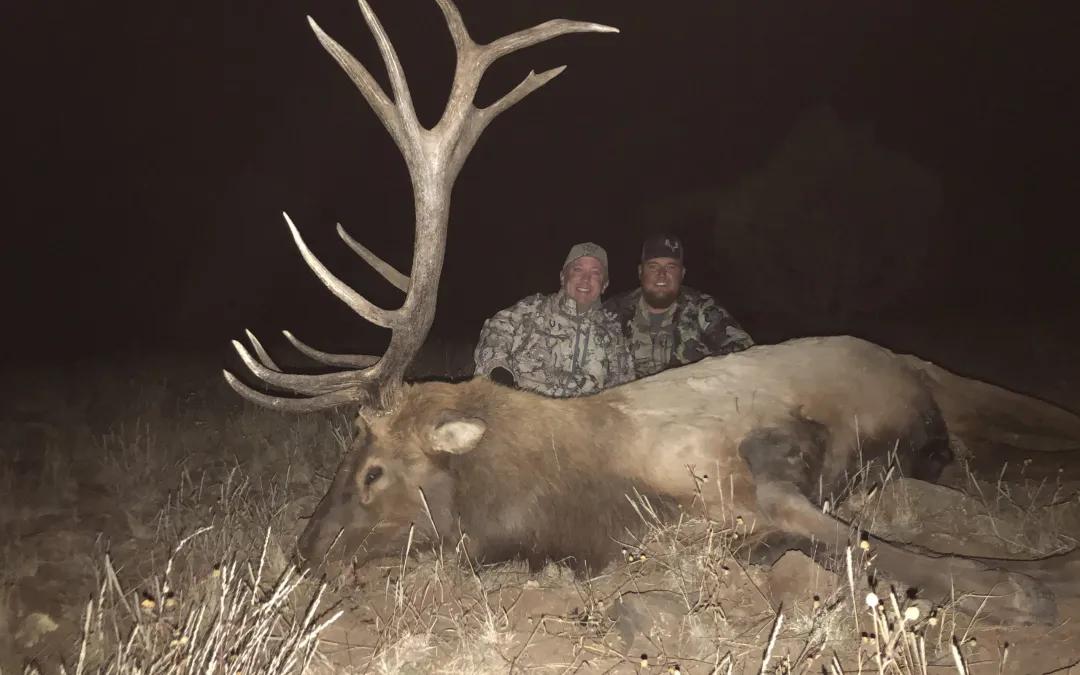
Most hunters shoot enough. They just shoot the wrong way.
Read More →
In open western country, the hunter who sees the most animals usually has the best week. Not the fastest hunter, not the fittest one, and certainly not the…
Read More →
Ready to Go?
Tags are limited and dates fill fast. Let's get your season on the calendar.
Book Your Hunt → or call (575) 315-6107